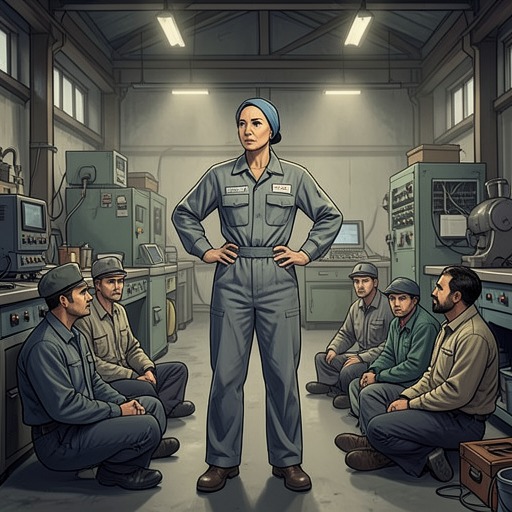
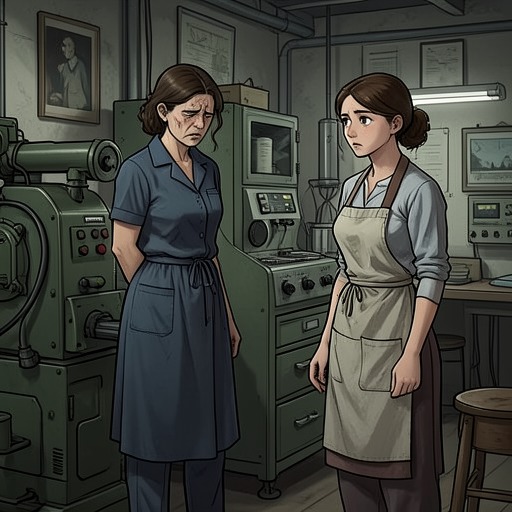
The independent woman
The Second SexThe independent woman names a condition, not a finished achievement. Work can give a woman direct access to the world, income, and self-directed projects, loosening the dependence that makes a man her intermediary. But a ballot and a job do not by themselves establish equality. The woman who works remains situated within institutions and customs shaped around men, while domestic and reproductive responsibilities, economic exploitation, and the pressure to conform to femininity continue to narrow her choices. Her independence is real, consequential, and incomplete.
From formal rights to concrete freedom
French law has removed obedience from a wife’s stated duties, and women have gained the vote. Yet civic liberties remain abstract when they are not joined to economic autonomy. A wife or mistress supported by a man is not made independent simply by holding a ballot; fewer social constraints than in the past do not necessarily undo her position of dependence. Work matters because it can collapse the arrangement in which a woman needs a masculine intermediary to reach the world. Through productive activity, she can take responsibility for projects, appropriate income and rights, and affirm herself as a subject rather than being confined to waiting on another person’s decisions.
That argument does not make employment a cure in itself. A cleaning woman working on a hotel lobby floor takes pride in having made her way without asking anyone for help, but such self-sufficiency does not mean that every worker has escaped exploitation. The majority of workers remain exploited, and a woman’s job does not ensure that she also possesses freedom. The account reserves full confidence in the conjunction of work and liberty for a socialist society; under existing arrangements, paid employment can provide concrete agency while leaving the wider conditions of inequality intact.
Nor can women’s condition be explained by physical capacities alone. Technical change alters the practical significance of bodily differences: operating modern machines may require only part of the resources conventionally associated with men, and when the minimum strength required falls within women’s capacities, women can work on equal terms. The burdens of maternity also depend on social arrangements. Numerous pregnancies without assistance make those burdens overwhelming; the freedom to decide whether to have children, support during pregnancy, and childcare can make maternal responsibilities more compatible with work. The body is part of a situation whose effects are shaped by social organization, not a self-sufficient explanation of women’s fate.
Work, dependence, and the labor left at home
The history of work also reveals why earning a living has never been enough. In the account of early agricultural communities, women’s domestic tasks included productive activities such as pottery, weaving, and gardening. With the spread of metal tools and the plow, expanded agriculture and private property shifted economic authority toward men. Paternal inheritance replaced maternal descent, and women’s domestic labor lost status beside men’s recognized production. The resulting dependence was reinforced by a sexual double standard: a man could claim sexual freedom, while infidelity became, in the analysis presented, one of the few defenses available to a woman bound to domestic subordination. Emancipation therefore requires more than individual effort: the whole female sex must enter large-scale production, and women must not remain incidentally tied to unpaid domestic labor.
The reproductive burden persists in a different form when women enter paid work. Women’s fertility has historically gone largely unregulated; in many periods, early marriage and repeated pregnancies made women’s lives a succession of births. Birth control existed in some earlier settings but was unevenly available, and for many women the practical consequence was repeated pregnancy rather than a deliberate balance between family and employment. In the modern conditions described, pregnancy remains difficult to reconcile with work when contraception is not widely or reliably used, abortion is forbidden, and childcare and housekeeping fall almost entirely to women. In France, a man might regard household chores as beneath him because they had traditionally been assigned to women. A working wife consequently had to combine paid employment with responsibilities her husband was not expected to share equally.
Housework is not merely an extra task appended to a woman’s career; it is a form of activity that can make a home feel like her own while keeping her within repetitive labor. A wife may insist on doing domestic tasks herself, or supervise the work of others, because managing food, clothing, and care gives her a role in the family’s daily life. Yet this activity does not necessarily provide individual affirmation or an escape from immanence. The work renews itself: dishes must be washed again, clothing becomes dirty or torn again, and the effort secures the continuation of the household rather than opening a new future. A young girl who hears the vacuum cleaner during housecleaning day can already imagine that her mother’s daily routine will repeat until death. The contrast between such cyclical labor and work directed toward a project clarifies why employment matters, while also showing why employment added to domestic labor may multiply rather than relieve a woman’s burden.
The burden can be especially stark in rural life. A French peasant woman may share her husband’s economic interests and carry substantial responsibility in the household, sometimes exercising considerable moral authority. But she also tends the garden and animals, performs heavy agricultural work, prepares meals, manages the household, and raises children. Her day begins at dawn with feeding animals and serving the men’s first meal, continues through childcare and work in fields or woods, and extends after dinner into mending, cleaning, and other chores. Pregnancy and childcare are added to this schedule, often without enough time to attend to her health. While a man may take Sundays or fair days to meet other men, visit a café, play cards, hunt, or fish, she remains on the farm with little leisure. The existence of authority within the household therefore does not cancel the material cost of the labor she performs.
The incomplete promise of paid employment
Women’s entry into the workforce has been substantial, but its scale and character vary. In France, 900,000 women worked from home in 1900 making clothing, leather goods, funeral wreaths, purses, beadwork, and souvenirs; that number later fell considerably. In 1906, 42 percent of working-age women were employed across agriculture, industry, business, banking, insurance, offices, and liberal professions. Before the Second World War, the reported proportion of women aged eighteen to sixty who worked was 42 percent in France, 37 percent in Finland, 34.2 percent in Germany, 27.7 percent in India, 26.9 percent in England, 19.2 percent in the Netherlands, and 17.7 percent in the United States. Those figures do not mean the same thing in every country: France’s and India’s high proportions reflected the extent of rural labor. In France in 1940, excluding peasant women, there were approximately 500,000 women heading establishments, one million female employees, two million women workers, and 1.5 million women working alone or unemployed. Among female workers, 650,000 were domestic workers; 1.2 million worked in light industry, including 440,000 in textiles, 315,000 in clothing, and 380,000 in home dressmaking.
Industrial employment and professional work can create the material basis for independence, but their advantages are distributed unevenly. A woman employed in a factory may be economically independent while also belonging to an economically oppressed class; factory work does not release her from housework. The question cannot be settled by asking whether women would prefer a factory to the home without considering the hours, conditions, and alternative arrangements involved. If women could choose between forty hours of work in a factory and forty hours at home, or could take part in building a world they regarded as their own, their answer might be different. As things stand, society and husbands often fail to provide the support needed to make working women concrete equals of men.
The possibility of choosing independence is further weakened by low wages and the unequal rewards attached to male support. A shopgirl, office worker, or secretary may find that her earnings cannot meet the standard of living society demands of her, while adequate housing, clothing, recreation, and even romantic possibilities remain out of reach on her own income. She may accept help from a man, sometimes while continuing to work; in other cases she may leave her job to become financially maintained. Work can free her from a lover, and a lover can offer an escape from work, but dependence on both employment and masculine protection can produce a double servitude rather than self-sufficiency. For a married woman, her wage is often only additional household income; for a woman who is supported by a man, paid work may not be the basis of her security. Neither arrangement necessarily gives her independence through her own efforts.
The social and personal costs of independence
The women who have achieved professional and social autonomy are still a minority, and their position is often misread by both their critics and their defenders. Antifeminists argue that emancipated women accomplish little and lack inner balance; feminists may overstate their achievements and overlook their frustrations. The more complex account is that such women have not taken a wrong path, but have reached only partway into a new condition. Economic autonomy does not put a woman in the same moral, social, or psychological circumstances as a man. At the start of adult life she does not have the same past as a boy, is not regarded in the same way, and approaches the world from a different perspective. An independent woman must negotiate problems attached to being a woman as well as those attached to being an autonomous person.
The conflict is sharpened by the demand that a woman claim sovereignty without surrendering the social value assigned to femininity. A man’s vocation as a human being is not treated as conflicting with his destiny as a male; professional or spiritual achievement can reinforce his masculine prestige. A woman, by contrast, is expected to be both a full individual and an object of desire, a sovereign subject and someone who renounces sovereignty to appear as prey. Refusing a prescribed female role can invite sexual and social devaluation, while conforming to it can restrict independent action. Rejecting feminine attributes does not simply grant access to men’s position: femininity is organized through customs and fashion, and women do not have unrestricted power to redefine its terms. The problem is not resolved by telling women either to abandon feminine appearance or to accept it without question.
The pressure is also carried into the domestic and personal routines of a woman who has a career. A woman colleague sent to a new city may feel obliged to establish a home where a male colleague might simply stay in a hotel; her housekeeping is judged more strictly, and neglect that would be overlooked in a man may count against her. Work clothes, appearance, and household standards demand time as well as money. A secretary or student may return home to mend stockings, wash a blouse, or iron a skirt; a woman with higher earnings can pay to avoid some of these chores, but may then face a greater demand for elegance and lose time to shopping and fittings. These practices are not merely outside judgments. A woman may want a home as a refuge and a visible expression of independence, and may continue habits formed through childhood games and adolescent expectations even after she finds freedom elsewhere. Wanting to live both like a man and like a woman can thus multiply her workload and fatigue.
Professional autonomy also remains entangled with economic and sexual inequality. A woman may find that achievement, fame, or fortune increases her sexual appeal while the activity through which she achieved them is treated as incompatible with conventional femininity. The intellectual woman can understand herself as a conscious subject even in situations where society expects her to appear as an unselfconscious object of attraction. Her effort to secure acceptance by meeting standards of feminine charm cannot by itself erase that contradiction. The obstacle is not a personal failure of confidence but a conflict between the independent activity that allows her to act in the world and the social expectation that she make herself available to another’s judgment.
Motherhood, health, and a divided life
Motherhood remains among the functions least accessible to women in complete freedom. In England and the United States, birth control can allow a woman to refuse motherhood; in France, where abortion is prohibited, women may undergo painful and costly abortions or find themselves with children they did not want. Social disapproval of the unmarried mother and stigma attached to a child born outside marriage further restrict the conditions under which a woman can choose motherhood. Interest in artificial insemination is presented not as a wish to avoid male intimacy but as a hope that voluntary motherhood might become socially acceptable. Even when a woman has chosen to have a child, the lack of well-organized nurseries and kindergartens can make one child enough to halt her activity unless she entrusts the child to relatives, friends, or servants. She is left facing a painful choice between sterility and care obligations difficult to reconcile with a career.
For that reason, the independent woman may remain divided between professional interests and her sexual and maternal vocation, trying to balance them through concessions, sacrifices, and continual adjustment. The resulting tension is not proof that work is inherently harmful to women. Menstruation, for example, can cause severe pain; some energetic women may lose a full day each month, while others attach little importance to their monthly difficulties. The account resists treating women’s health as a simple bodily obstacle or dismissing illness as imaginary. It argues that the psychological strain of taking on multiple tasks while confronting contradictory expectations can contribute to real, burdensome ailments. A situation is not reducible to the body; the body’s condition is also affected by the situation. When working women have a place in society that matches their capacities, work may strengthen their physical balance by drawing them away from constant preoccupation with their ailments.
The obstacles begin before a career is established. During study and the early years that help determine professional prospects, women may not be able to use their capacities fully; a poor start can handicap them later. Between eighteen and thirty, conflicts over work, family obligations, and inherited expectations can become especially intense, at the very time when professional futures are taking shape. Family and friends may respect women’s efforts less than men’s and impose chores that limit their freedom. The account therefore treats professional success not as an isolated test of talent, but as the outcome of circumstances that distribute time, support, and opportunity unequally.
Independence as an unfinished transformation
The measure of independence is not a woman’s formal permission to work or vote, but whether she can direct her life through meaningful projects without being returned to dependence by unpaid labor, inadequate wages, limited childcare, or the demand to exist chiefly for men. Work has a decisive role because it can restore transcendence: a woman acts, pursues ends, accepts responsibility, and secures material means of her own. Yet an individual worker cannot by herself remake the social world that still bears the imprint of men. Economic autonomy is necessary, not sufficient.
The concept thus holds two facts together. Women’s labor and professional achievement make a different relation to the world possible; the circumstances surrounding that labor can still reproduce subordination. Domestic tasks may offer activity and attachment to a home while repeating without lasting completion. Motherhood may be wanted, yet become an imposed interruption when reproductive choice and childcare are unavailable. A job may yield income, yet leave a woman exploited or obliged to perform a second shift at home. Independence emerges not as solitary escape from every obligation but as the possibility of choosing commitments and pursuing them as a subject, with social conditions that do not make freedom depend on a man’s support.